
Quick answer
Scaffolding finance helps erectors and builders buy scaffold stock, systems, trucks and tools and repay from the jobs it supports. Because scaffold is bought in bulk and earns through repeat use, lenders look at stock records, utilisation and contracts. Unsecured options typically run from $5k to $500k, property-secured from $20k to $5m, for business use only, with no credit check on first enquiry.
Key points
- Scaffold earns by being erected, dismantled and reused, so stock volume matters
- Tube-and-coupler and system scaffold are priced and used differently
- A truck and a yard are part of the real investment
- Cash is tied up between erecting and the final payment
- No credit check when you first enquire
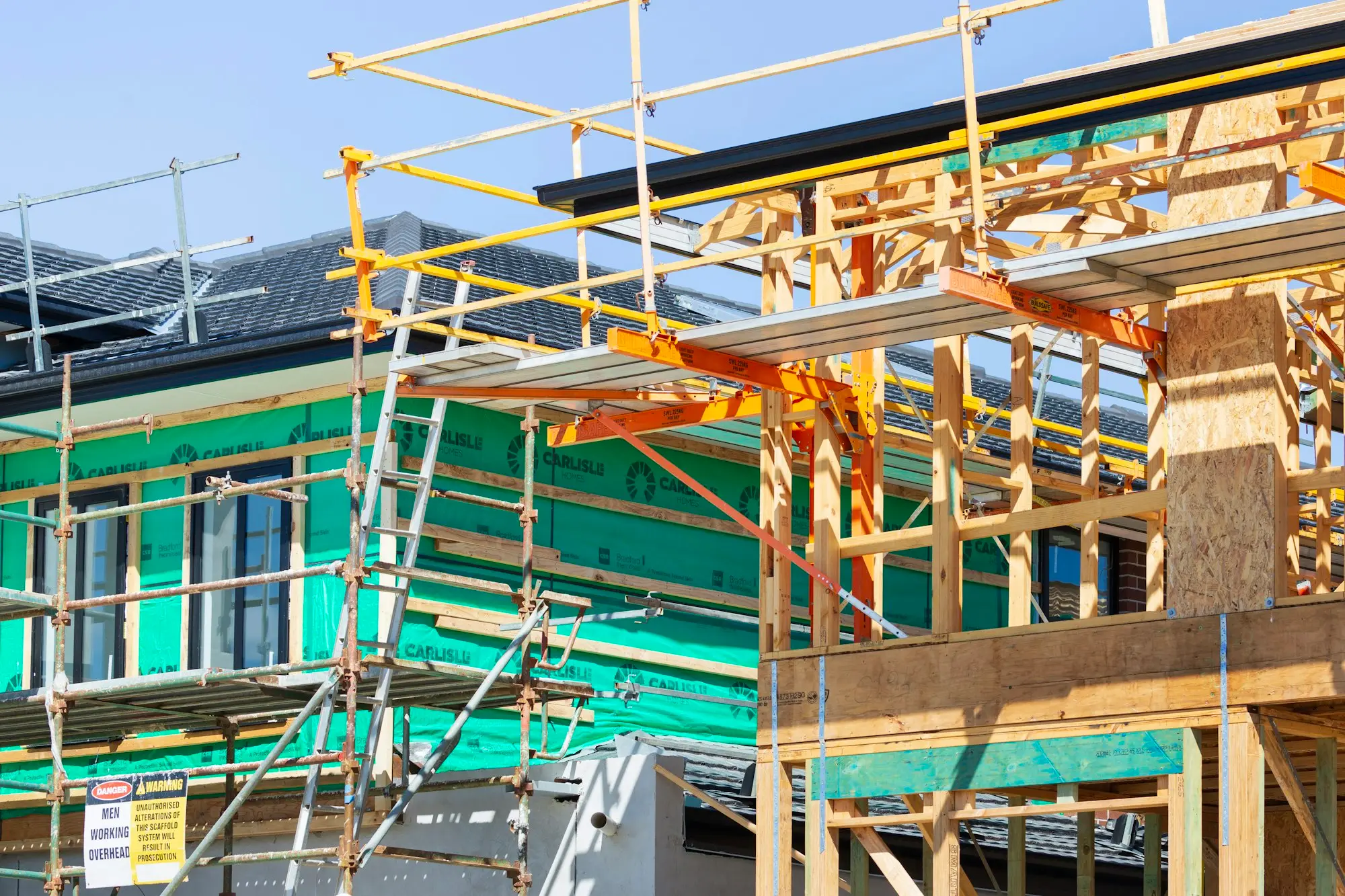
Scaffolding is a stock business. You buy a lot of steel or aluminium in advance, store it, move it, put it up, take it down and put it up again somewhere else. The money is made by repetition. That makes the finance question different from a single machine: you are not funding one asset, you are funding a growing inventory that has to be kept working.
What does scaffolding stock actually cost?
We do not quote prices, but the drivers are straightforward:
- System type. Modular systems with fast-fit connections tend to cost more per unit than traditional tube and coupler, but they can speed up erecting.
- Volume. A job needs enough stock to cover the whole elevation, and a business needs enough to run more than one job at once.
- Components. Planks, ladders, toeboards, guardrails, stair units, wheels, base plates and ties all have to be counted.
- Condition. New stock costs more and lasts; used stock is cheaper but needs inspection.
- Handling. Trucks, pallets, racking and a yard are part of the investment.
A good supplier will quote a pack for a defined job size. Start there, then add stock as the business wins more work.
Tube and coupler versus system scaffold: how do they compare?
| Feature | Tube and coupler | System scaffold |
|---|---|---|
| Flexibility | Fits awkward shapes | Best on regular, repeating façades |
| Speed | Slower to erect | Faster once crews know it |
| Training | Skilled and experienced crew | Easier to train, but still regulated |
| Stock cost | Often lower per unit | Often higher per unit |
| Storage | Loose pieces, more sorting | Standard components, tidier |
Many erectors run both. The choice affects what you borrow, and the finance should match the mix you will really use.
How do lenders see scaffolding as security?
It is more complex than a single machine, because the asset is many pieces. Lenders typically want to understand:
- a stock list with quantities and condition
- where it is stored and how it is protected
- how often it is out on hire or on your own jobs
- your regular clients, such as builders or strata managers
- the money moving through the business account
A deposit or extra security helps, and property-secured loans from $20k to $5m exist where the purchase is larger. For the truck side, see tipper truck finance, and for vehicles like a scaffold truck, our vehicle pages explain how those are handled.
What licences, safety and insurance sit around it?
Scaffolding is a regulated activity, and the rules about heights, licence classes and inspection sit with your state or territory work-safety regulator. That is important for finance because a purchase plan that assumes you can erect to any height is only as good as your crew’s tickets. Insurance is another cost line: public liability, plant, theft and transit are separate things to price. A fall from your scaffold is a catastrophic event, so you want cover that fits the work you actually do.
Want to check your options for scaffolding stock?
With a stock list and a quote ready, you can see what finance could look like. It takes around a minute and your credit file is not part of that first stage.
An illustrative example
This is a made-up scenario for explanation only.
A builder has been hiring scaffold for house extensions and notices the hire bills are one of the biggest costs on every job. The builder’s licensed crew can erect and dismantle, so they buy a starter set of system scaffold sized for a standard two-storey elevation, plus a trailer to carry it. They finance the purchase and plan to charge their own jobs a scaffold line instead of the hire company’s, with occasional spare capacity hired to other trades.
If the builder keeps three or four jobs a month needing scaffold, the set pays its way. If work slows, the stock sits in the yard. The builder tests a slow month on the spreadsheet before signing.
How does cash flow behave in a scaffolding business?
You carry the costs up front: stock, labour to erect, transport, dismantling. Payment often comes on completion or in stages, sometimes via a head contractor on 30-day terms. If your business pays crew weekly, a long payment cycle is a squeeze even when the order book is full. That is why scaffolders often pair equipment finance with a working-capital facility, and the progress payment gaps page looks at that side. For larger access gear, the crane and EWP page is a neighbouring subject.
Does the maths favour owning?
The equipment payback calculator helps compare hire against ownership using your own job numbers. Think in terms of days out earning, not days in the yard. The buy vs lease vs loan guide covers how to structure the purchase if you do go ahead.
What records should a scaffolder keep?
Good records make finance, insurance and safety checks easier. Keep a running stock list by component, a log of inspections and repairs, photos of each job’s layout and a diary of which stock is out where. When stock goes missing, which happens on busy sites, a list tells you quickly what to replace and whether a deposit from the client is overdue. Lenders reading a file with tidy records see a business that controls its inventory, and that tends to count for more than a long story about how busy you are.
Ready to see if you qualify?
Scaffold is a numbers game: the more of it out working, the better the maths looks. Describe what you plan to buy, the work behind it and what you can contribute. A first enquiry involves no credit check, your details do not go to a queue of lenders, and a real person looks over your situation. Accurate answers mean the right match comes quickly, so start your scaffolding enquiry when you are ready.
Frequently asked questions
Do I need a licence to put up scaffolding?
Work above certain heights usually needs a high-risk work licence, and the classes and rules are set by each state or territory regulator. Check your own regulator before building a business plan around it.
Is it better to buy scaffold or hire it in?
Hiring suits occasional jobs. If you erect regularly, owning stock can lower the per-job cost, but only if it stays out working. Idle scaffold is a repayment without income.
How do lenders view scaffold as an asset?
It is bulky, durable and reusable, but harder to track than a single machine. Clear stock lists, condition records and evidence of regular contracts strengthen the case.
Can I finance a scaffolding truck and the scaffold together?
They can be considered together or separately. Vehicle finance has its own pathway on this site, so the truck may be handled differently from the stock.
What if I am a builder who just wants some scaffold for my own jobs?
That is a common starting point. Show the jobs it will support and compare ownership against hire for your annual usage.
Short on time? Enquire right here
About 60 seconds. No credit check when you first enquire, and a real person calls you back.