
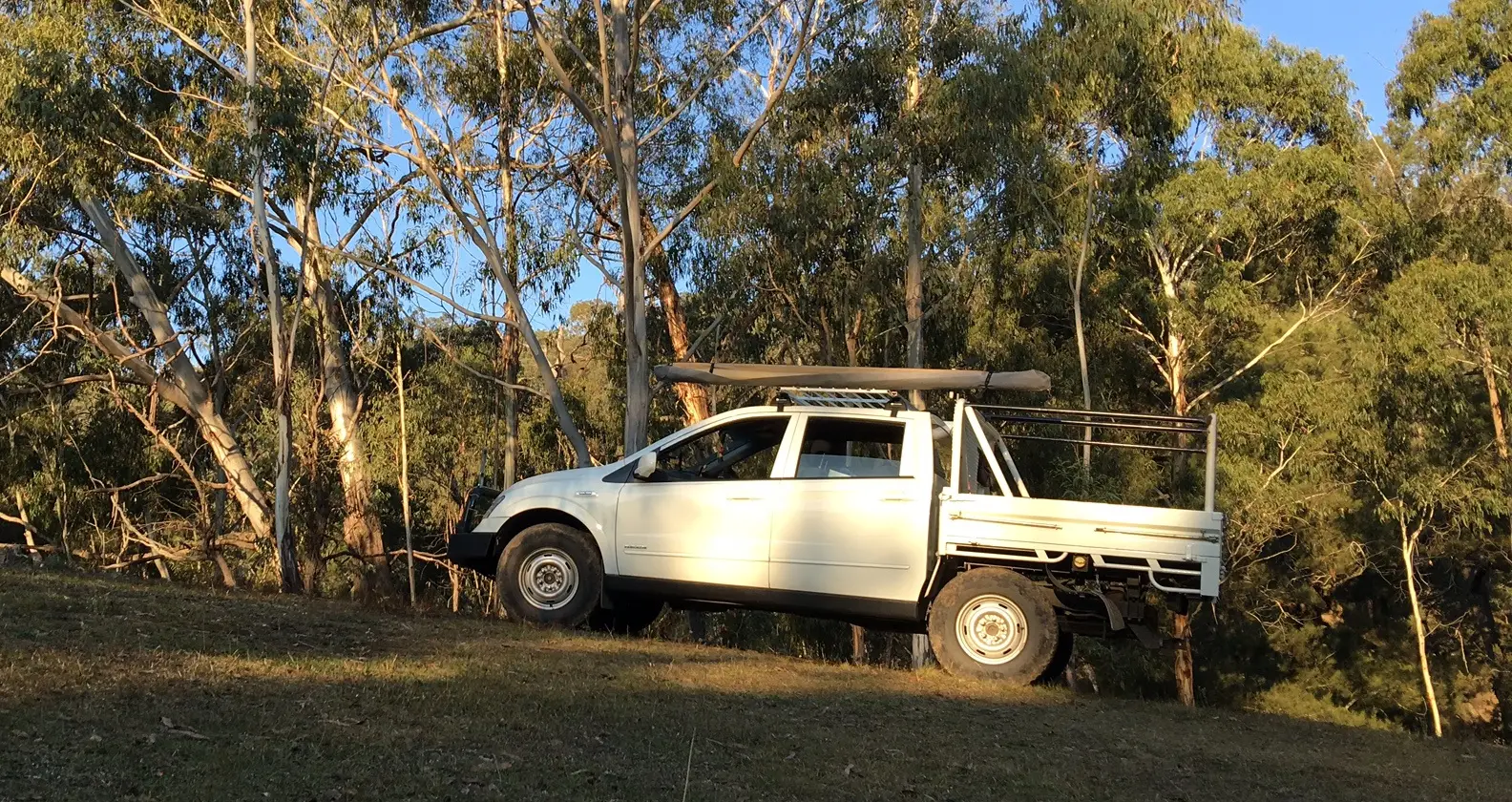
Quick answer
Dual cab ute finance works like other work vehicle finance, with an extra layer of checks. Payload and towing capacity matter because a dual cab seats a crew but loses tray length, and the vehicle may be classed as a car for tax if its payload is under one tonne. Loan Finder Store arranges dual cab ute finance for tradies, comparing loan, hire purchase and lease options.
Key points
- A dual cab trades tray space for crew seats, so check payload carefully.
- Payload under one tonne can mean the ATO treats it as a car.
- Towing rating matters if you pull plant or a loaded trailer.
- Loan Finder Store arranges the finance.
- Typical user
- Tradie with an apprentice or crew member
- Check first
- Payload, towing rating, licence class
- Tax angle
- Car versus one tonne or more
- Arranged by
- Loan Finder Store
The dual cab is the Swiss army knife of the trade yard. It takes the apprentice to site, hauls the gear, tows the trailer and still fits in the driveway on Sunday. It is also one of the vehicles where small details on the spec sheet change the finance and the tax outcome.
Why do tradies choose a dual cab?
The honest answer is people. A single cab seats two at most, which stops being useful the day you hire an apprentice or take on a labourer. A dual cab keeps the crew in one vehicle, which means one set of fuel, one rego and one parking spot.
It suits electricians and plumbers who run an apprentice, carpenters who share a ute between two people, and landscapers whose crew meets at the yard each morning. The trade-off is a shorter tray, which matters if you carry long lengths of timber, conduit or pipe.
What should I check on the compliance plate?
Brochures speak in headline numbers. The compliance plate, together with the owner’s manual, tells you what the vehicle can really do.
- Payload. What you can carry including passengers, fuel and fitout. Canopies and drawers eat into it quickly.
- Towing capacity. Braked and unbraked ratings differ. Match them to your trailer, not the best case.
- Gross vehicle mass. The ceiling for the loaded vehicle.
- Licence class. Most dual cabs sit within a standard car licence, but check any heavier models.
An illustrative example, not a real business: a bricklayer adds a steel canopy, two toolboxes, a full tank and two crew members before loading a single brick. By the time pavers go on the tray, the payload is already thin. Knowing that before purchase avoids a surprise at a weighbridge.
How is a dual cab treated for tax?
The ATO draws a line between cars and vehicles designed to carry one tonne or more. A car is designed to carry a load of less than one tonne and fewer than nine passengers. Many dual cabs come in under that line, which means they may be classed as cars and subject to the car depreciation cost limit. Some dual cabs, and many single cabs, carry more.
This does not mean one is better than the other. It means you should ask your accountant for a view on your exact model before you sign, since the class can affect how the cost is claimed.
Loan, hire purchase or lease on a dual cab?
All three are available, and the choice follows the same logic as any ute loan: ownership, final payment and how long you plan to keep the vehicle.
| If you… | You might lean towards |
|---|---|
| Plan to keep it eight years | A loan or hire purchase with no final payment |
| Like a new vehicle every few years | A lease with a known end value |
| Need the lowest regular repayment | A structure with a final payment, with a plan for the ending |
Dual cabs hold their value well, which can help at the end of a term. Condition, kilometres and market demand still decide the number.
What about towing and trailers?
Many dual cab owners also run a trailer for plant, a mower, a hot water system or a pile of building waste. Think of the trailer as part of the same purchase. A good ute with a mismatched tow rating becomes a poor vehicle for the job. Our trailer finance page covers the other half of the combination.
How do I get dual cab finance?
Dual cab ute finance is arranged through Loan Finder Store. Bring the vehicle details, your ABN information and recent business bank statements. If your ABN is newer, read buying a ute with an ABN first.
New or used dual cab: which makes more sense?
New brings warranty, the latest safety features and a predictable first few years. Used brings a lower price and slower depreciation, but with the risk of surprise repairs. Lenders often apply different terms depending on age and kilometres, so a very old vehicle may suit a shorter term.
Many tradies land in the middle: a nearly new ute with a few thousand kilometres on the clock. Whatever you choose, get a pre-purchase inspection on a used vehicle and a written service history. A dual cab that has towed heavy loads every weekend for five years is a different animal from one that sat in a driveway.
Does a dual cab affect insurance and the crew?
It can. Insurers look at who drives the vehicle, so list any employees or apprentices who will be behind the wheel. If your crew uses the ute, check that your policy and your vehicle policy both reflect that. A cheap premium that does not cover a crew member is no saving at all.
It is also worth asking how the vehicle will be used for private trips, as that affects both insurance and records for tax. Your accountant can tell you what to log.
Put the crew on the road
A dual cab should make work easier, not tighter. Choose it for the job it must do, check the plate, and match the finance to how long you will keep it.
When you are ready, start your dual cab finance enquiry with Loan Finder Store. It is an enquiry, not a full application, your details are not spread across a pile of lenders, and a real person looks at your circumstances. Answer the questions accurately and the right option is far easier to find.
How it works, step by step
- 1
Define the job
List the weight of tools, materials and trailers you carry.
- 2
Check the plate
Read payload and towing figures on the compliance plate, not the brochure.
- 3
Ask your accountant
Confirm how the vehicle will be classed and depreciated.
- 4
Apply
Go through Loan Finder Store with the vehicle details ready.
Frequently asked questions
Is a dual cab treated as a car for tax?
It depends on the design. The ATO defines a car as designed to carry a load of less than one tonne and fewer than nine passengers. Many dual cabs fall under one tonne of payload, but models differ, so check the compliance plate and ask your accountant.
How much payload do I need?
Add up what you really carry: tools, materials, a canopy and a crew. Then keep a buffer. Overloading a ute can affect safety, insurance and the vehicle's life, so buy for your heaviest regular day.
Does a dual cab cost more to finance than a single cab?
The vehicle usually costs more, so the loan is larger. The structures are the same. A used dual cab may suit a tighter budget.
Can I finance a canopy and accessories with the ute?
Often, depending on the lender. Ask for the fitout to be itemised in the quote so it can be included in the finance rather than paid for in cash.
Can I get a dual cab on a newer ABN?
It can be possible, though a smaller deposit may need extra support. The page on buying a ute with an ABN explains what helps.